
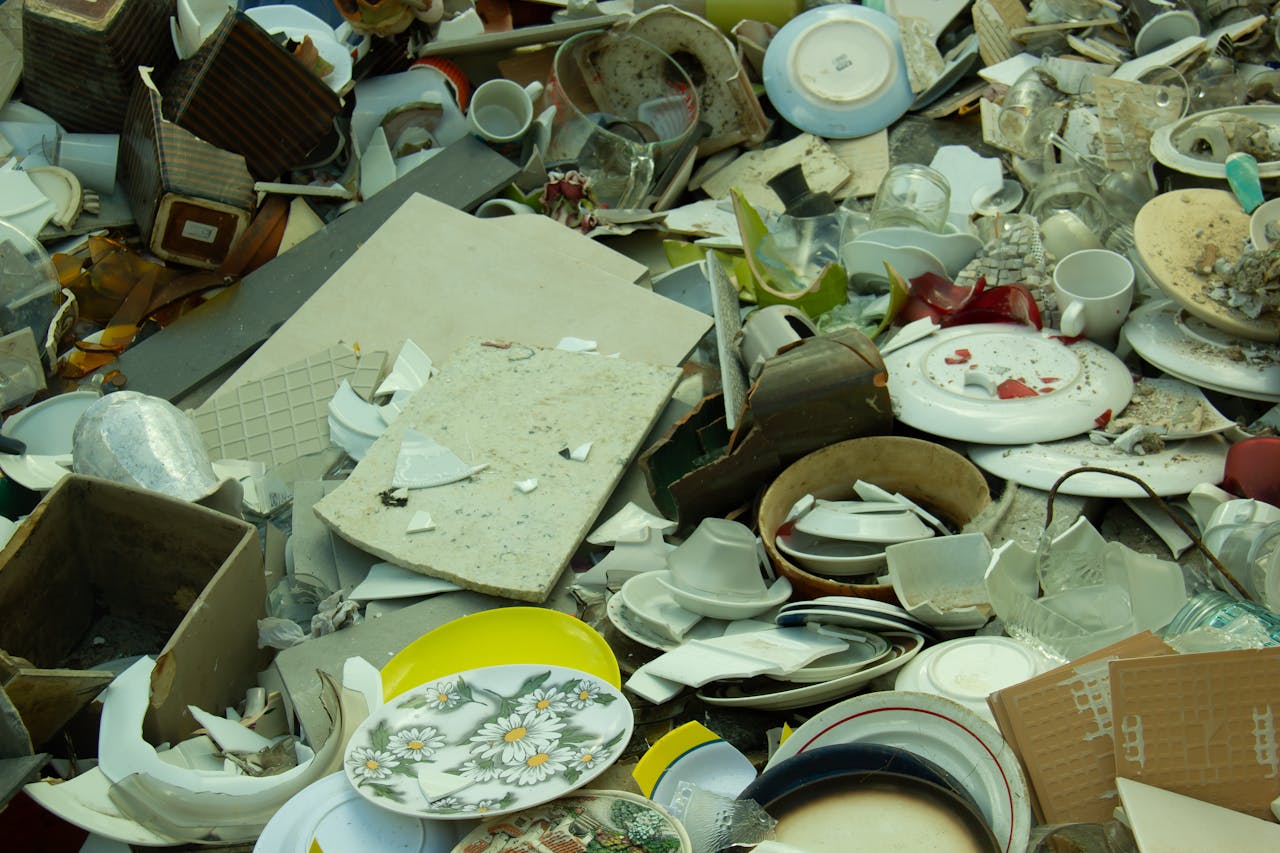
Every tiling project produces waste. Cuts generate offcuts. Offcuts that are too small get tossed. Tiles break. Some extras sit in the garage forever. That's the reality.
But here's what most people don't think about: the cost of that waste scales with your tile choice. A 10% waste factor on $2/sqft ceramic is a rounding error. The same 10% on $15/sqft marble is a significant chunk of money. And that generic "add 10%" advice? It's wrong more often than it's right.
Let's put actual dollars on tile waste and talk about how to get honest numbers instead of guesses.
The Dollar Impact of Tile Waste
Here's what waste actually costs at different price points and room sizes, assuming a 10% waste factor:
| Tile Price/sqft | 50 sqft bathroom | 120 sqft kitchen | 300 sqft open floor |
|---|---|---|---|
| $2 (basic ceramic) | $10 | $24 | $60 |
| $5 (mid-range porcelain) | $25 | $60 | $150 |
| $8 (quality porcelain) | $40 | $96 | $240 |
| $12 (natural stone) | $60 | $144 | $360 |
| $20 (premium marble) | $100 | $240 | $600 |
Now here's the kicker: 10% is often optimistic. Certain room shapes and tile patterns generate 15-20% waste. A herringbone pattern in an irregularly shaped room can hit 25%. That $600 in waste on your premium marble open floor? It could actually be $900-$1,500 if the layout is unfavorable.
And these are material costs only. If you're paying a contractor, you're also paying labor to cut tiles that end up in the dumpster.
Why Flat Percentages Lie
The standard advice — "add 10% for waste" — is a rough average that's accurate for nobody. Here's why:
Room Shape Changes Everything
A perfect rectangle with cuts along only two walls generates maybe 5-7% waste with a standard straight-set layout. An L-shaped room, a room with alcoves, or a bathroom with a curved shower bumps waste to 12-18% because you're making cuts along many more edges.
The waste factor for an L-shaped room is fundamentally different from a simple rectangle. A flat percentage can't account for that.
Tile Size Relative to Room Size Matters
Large tiles in a small room produce more waste than the same tiles in a large room. A 24x24" tile in a 5x8' bathroom means almost every edge has a cut, and many of those cuts produce offcuts that can't be reused. The same tile in a 20x15' great room has a much more favorable ratio of full tiles to cut tiles.
Conversely, small tiles in any room produce less waste per cut because each offcut represents less material. A broken 4x4" mosaic tile is pennies. A broken 24x48" large-format slab is real money.
Pattern Affects Waste Dramatically
- Straight set: Lowest waste. Offcuts from one end of a row often fit at the other end.
- 1/3 offset (running bond): Slightly more waste than straight set, but offcuts still reuse well.
- 1/2 offset (brick pattern): Similar to 1/3, but the half-tile starts create a consistent pattern of reusable cuts.
- Diagonal (45°): Higher waste. Every perimeter tile is a triangle cut, and many of those triangles are too small to reuse. See our diagonal vs. straight layout comparison.
- Herringbone: The highest waste of common patterns. The angled cuts along every edge generate lots of small, unusable offcuts. Our herringbone guide goes deeper on this.
Starting Position Changes Cut Sizes
Where you start your first tile determines where cuts fall along every wall. Start in the wrong spot, and you get a 1-inch sliver along the most visible wall — that's a full tile sacrificed for a cut you can barely see. Shift your starting point 4 inches, and that sliver becomes a half-tile cut with a reusable offcut.
This is one of the biggest hidden sources of waste, and it's completely preventable with planning.
Why Generic Calculators Get It Wrong
Most online tile calculators work like this: enter room dimensions, enter tile size, get a number, add 10%. Some let you pick 5%, 10%, or 15% waste. But the math behind them is just area division plus a flat multiplier.
That approach ignores:
- Where cuts actually fall in the layout
- Which offcuts can be reused and which can't
- How the pattern affects cut distribution
- How the starting position changes waste
- Room geometry beyond basic rectangles
A generic calculator might tell you to buy 110 square feet of tile for a 100 sqft room. The actual layout might require 118 sqft because of the herringbone pattern in your L-shaped kitchen, or only 104 sqft because you're doing a straight set in a clean rectangle and nearly every offcut reuses.
The difference between 104 and 118 sqft at $12/sqft is $168. That's real money left on the table — or wasted in the dumpster.
How Layout-Based Planning Gives Honest Numbers
The alternative to guessing is to actually generate the layout. Place every tile, identify every cut, determine which offcuts reuse and which don't, and count what you actually need.
This is what TilePlan does. Instead of multiplying square footage by a percentage, it generates the actual tile layout for your room — every full tile, every cut, every piece of waste. You can see exactly where the cuts land, adjust your starting point to minimize slivers, and compare how different patterns affect your material needs.
The result is a waste number based on your specific room, your specific tile, and your specific layout — not an industry average that might be off by 50%.
For contractors, this level of accuracy directly affects profitability. Overestimating means you're spending money on material that sits in the truck. Underestimating means an emergency material run, a potential dye-lot mismatch, and a job that runs over schedule. See our guide on how contractors estimate tile for odd-shaped rooms for more on professional estimating.
Practical Tips to Reduce Waste
Beyond accurate planning, here are ways to cut waste on the job:
Reuse offcuts deliberately. When you cut a tile, immediately label the offcut with its size and set it aside. Check your offcut pile before cutting a new tile for each position.
Plan cuts in sequence. If you know you need a 4-inch cut and a 20-inch cut from the same row, a single 24-inch tile produces both. Plan your cutting order to maximize usable pieces.
Buy from the same lot. Different production lots can vary in shade. Buying enough up front (based on accurate estimates) avoids the color-match problem of buying more later. Our guide on reducing tile waste on the job covers more techniques.
Don't over-buffer. The industry standard of 10% extra exists because planning used to be imprecise. With an accurate layout, you can reduce your buffer to 5% (for breakage and future repairs) and still have plenty.
Choose simpler patterns for expensive tile. If you're set on $20/sqft marble, a straight set wastes far less than a herringbone. You can still get a beautiful result without paying a 20%+ waste premium.
Frequently Asked Questions
What's a realistic waste percentage for most tile jobs?
For a straight-set or offset pattern in a roughly rectangular room, 7-10% is typical. For diagonal layouts, 12-15%. For herringbone, 15-20%. Irregularly shaped rooms add 3-5% on top of whatever the pattern generates. But these are still generalizations — the only way to get an accurate number is to plan the actual layout.
Should I return unused tile to the store?
Keep 2-3 extra tiles for future repairs (cracked tiles, stains, renovations around plumbing). Return the rest if the store accepts returns. Most big-box stores accept unused tile within 90 days with a receipt. Specialty tile shops vary — check their policy before you buy.
Is it worth paying more for a layout plan to save on tile waste?
On budget tile, probably not — the savings are small. But on tile costing $8/sqft or more, a precise layout plan can save $50-$300+ on a typical room. For contractors doing multiple jobs, the cumulative savings are significant. Tools like TilePlan are free, so there's no cost barrier.
How much extra tile should I buy for breakage?
Budget 2-3% for breakage on standard ceramic and porcelain. Increase to 4-5% for natural stone (which is more variable and prone to breakage) and large-format tiles (which are harder to cut without chipping). This is separate from layout waste — it's your insurance against accidents.
Can I reuse tile offcuts from one room in another room?
If you're using the same tile in multiple rooms (like a continuous floor through a kitchen and hallway), absolutely plan for offcut reuse across rooms. This is one of the biggest waste-reduction opportunities on multi-room jobs. Track your offcuts by size, and feed them into the layout for the next room.
Plan Your Tile Layout with TilePlan
Calculate materials, visualize patterns, and get accurate cut lists for any room shape.
Download Free on the App Store