
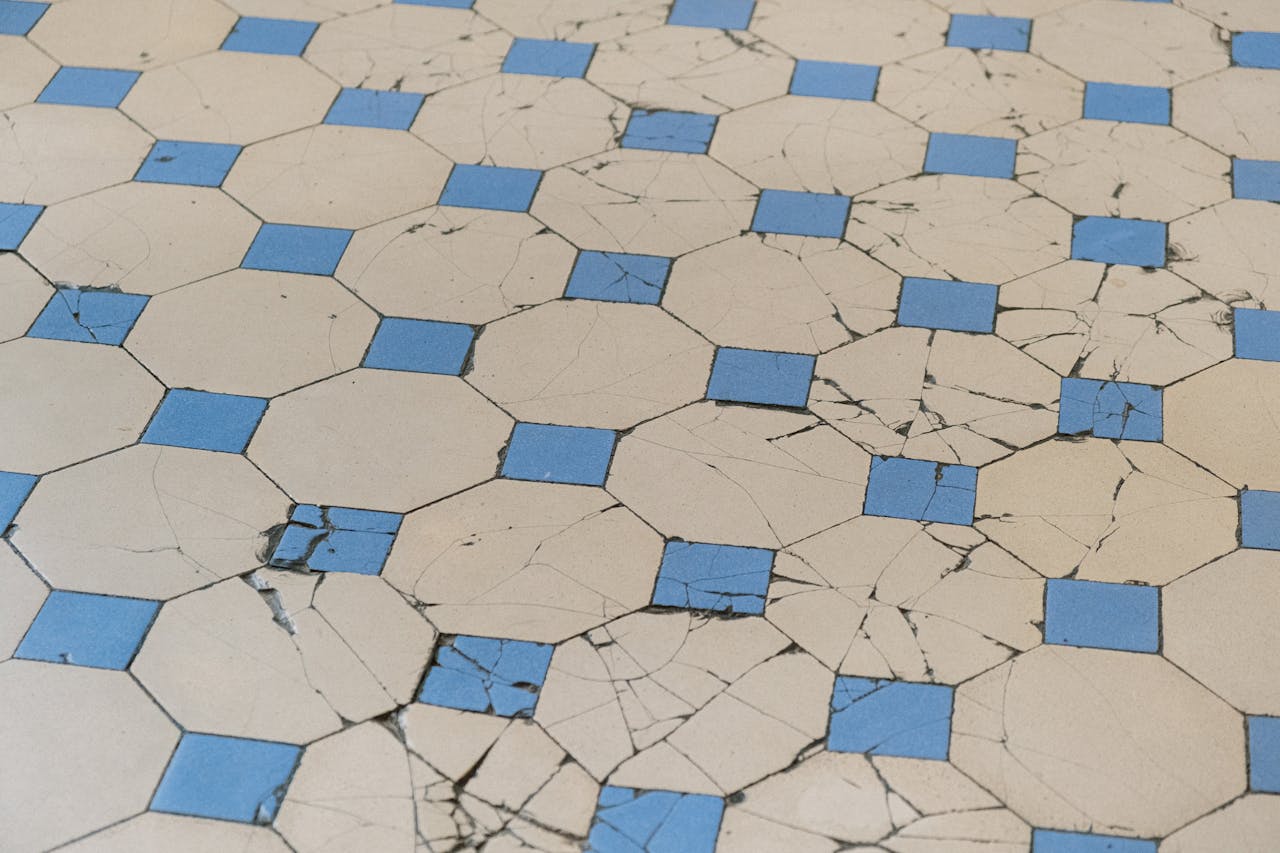
Ripping out old tile is brutal work. It's loud, dusty, slow, and often damages the subfloor underneath. So it's natural to wonder: can I just tile over what's already there?
The answer is yes — sometimes. But the conditions have to be right, and the prep has to be thorough. Get it wrong, and you'll end up doing the demo you tried to avoid, plus removing two layers of tile instead of one.
When Tiling Over Existing Tile Works
Tiling over tile is viable when all of the following conditions are met:
The existing tile is well-bonded. Walk the entire floor and tap tiles with a rubber mallet or the handle of a screwdriver. You're listening for a solid, consistent sound. Hollow sounds mean the tile has debonded from the substrate — that's a no-go. Every tile needs to be solidly attached.
The surface is flat. The same flatness standards apply here as any tile substrate. For tiles under 15", no more than 1/8" variation over 10 feet. For large-format tiles, 1/16" over 10 feet. Grout lines create inherent unevenness, but small grout joints (1/8" or less) on flat tile are usually fine. Deep grout lines or tiles with significant texture may need to be addressed.
The floor is structurally sound. Adding a second layer of tile adds weight — typically 4-8 pounds per square foot depending on tile size and thinset. Your subfloor and joists need to handle that. Over a concrete slab, this isn't a concern. Over a wood-framed floor, check your deflection.
Height transitions are manageable. A second tile layer adds 3/8" to 1/2" of height. That affects door clearance, transitions to adjacent rooms, toilet flanges, and cabinet toe kicks. Measure these before committing. A bathroom where the floor rises half an inch may need the door trimmed, the toilet flange raised, and transition strips at the doorway.
There are no moisture problems. If the existing tile is in a wet area and there's any sign of water damage, mold, or failed waterproofing underneath, you need to go down to the substrate and fix the real problem. Tiling over it just buries the issue.
When to Rip Out the Old Tile
Demo is the right call when:
- Tiles are loose or cracked. Even a few loose tiles suggest a bonding or substrate problem that'll affect the new installation.
- The floor is uneven. Significant lippage, humps, or dips in the existing tile mean the new layer won't be flat either. Self-leveling compound can sometimes fix minor issues, but major unevenness warrants removal.
- Height is already a problem. If the existing tile is already sitting high relative to adjacent flooring, adding more will make transitions awkward or impossible.
- The existing tile is over a questionable substrate. Old mud beds, deteriorating plywood, or mastic over drywall (common in old shower walls) — these need to come out.
- You're dealing with asbestos-containing tile. Some vinyl tile and adhesives from before the 1980s contain asbestos. If you suspect this, get it tested before disturbing it. In some cases, tiling over asbestos tile is actually the recommended approach — encapsulating rather than disturbing — but consult local regulations and an abatement professional.
How to Prep Existing Tile for Tiling Over
If the existing floor passes all the tests above, here's how to prepare it:
1. Clean Thoroughly
Strip any wax, sealers, or coatings. Degrease the surface completely. Tile that's been mopped with waxy cleaners for years has a film that prevents bonding. TSP (trisodium phosphate) or a good degreaser is your friend here.
2. Rough Up the Surface
Glazed tile is designed not to bond to things. You need to give the thinset something to grip. Options:
- Sanding with a diamond pad or angle grinder — scuff the surface to break the glaze. You don't need to remove all of it, just create texture.
- Bonding agent/primer — products like Mapei Eco Prim Grip or Custom Building Products' MegaLite primer create a bondable surface without heavy grinding. These are especially useful on porcelain, which is extremely dense and hard to mechanically abrade.
3. Fill Low Spots
If grout lines are deep, skim-coat the floor with a modified thinset to create a flatter surface. This is especially important if the new tiles are large-format — any void underneath will lead to cracking under load.
4. Use the Right Thinset
Use a high-quality modified (polymer-modified) thinset rated for tile-over-tile applications. Large-and-heavy-tile (LHT) thinset is a good choice. The polymer modification gives you the extra bond strength needed when adhering to a non-porous surface.
5. Plan Your Layout
This is where a lot of people skip ahead and regret it. With the added height, you need to know exactly where the new tiles will land — especially near doorways, cabinets, and fixtures. Running your layout through TilePlan before you start lets you see where cuts fall and make adjustments while it's still free to change your mind.
The Risks You Accept
Even when done correctly, tiling over tile carries some inherent risks:
Added weight. Two layers of tile plus two layers of thinset is significant. On upper floors or older construction, verify the structure can handle it.
Harder future repairs. If something goes wrong down the road, the next person (or you) has to deal with two bonded layers. Removal becomes much more difficult and destructive.
Bond line dependency. Your new tile is only as secure as the old tile's bond to the substrate. If the original installation fails in 5 years, everything comes up together.
Height headaches. Even with careful planning, the added height creates cascade effects. Toilet flanges need extension rings. Doors need trimming. Thresholds need replacing. Budget time and money for these details.
What About Tile-Over-Tile on Walls?
The same principles apply to walls with one important addition: weight matters more vertically. Tile on walls is fighting gravity, and a second layer doubles the load on the adhesive bond. Use a premium polymer-modified thinset, and consider mechanical anchoring (screws with washers into the substrate through the existing tile) for very heavy applications. In showers, be extremely cautious — if the existing wall tile has any moisture behind it, you need to remove it and address waterproofing properly.
The Smart Alternative: Uncoupling Membranes
If you're tiling over existing tile and want extra insurance, consider an uncoupling membrane like Schluter Ditra over the old tile. This gives you a fresh bonding surface, adds crack isolation, and provides waterproofing in wet areas. It does add a bit more height, but the peace of mind is often worth it. For more on underlayment options, see our tile underlayment guide.
Frequently Asked Questions
Do I need to remove the grout from existing tile before tiling over it?
No. Leave the grout in place. If the grout lines are deep (more than about 1/8" below the tile surface), skim-coat with thinset to fill them and create a flatter surface. Removing grout would risk destabilizing the existing tiles.
Can I tile over vinyl or linoleum?
It depends. Well-bonded sheet vinyl or vinyl tile over a solid substrate can work with proper prep — roughing the surface and using the right primer and thinset. However, if the vinyl is cushioned (has a foam backing), it must come out. The cushion layer is too flexible for tile. Also check for asbestos in pre-1980s vinyl before disturbing it.
Will the grout lines from the old tile show through the new tile?
Not if you prep properly. Using a full-coverage thinset application and appropriately sized new tiles prevents telegraphing. If the old grout lines are very deep, skim-coating first solves the problem. With large-format new tiles, you have more surface area bridging the old joints.
How much weight does a second layer of tile add?
Standard ceramic tile with thinset runs about 4-5 lbs per square foot. Porcelain is slightly heavier. So a second layer adds roughly 4-8 lbs/sqft depending on tile thickness. Over a 100 sqft bathroom, that's 400-800 additional pounds. Concrete slabs handle this fine. Wood-framed floors need verification.
Is tiling over tile up to code?
Most building codes don't specifically prohibit tiling over tile, but they do require that the finished installation meet deflection, waterproofing, and height-transition requirements. The added weight must be within the structural capacity of the floor system. Check with your local building department if you're pulling a permit.
Plan Your Tile Layout with TilePlan
Calculate materials, visualize patterns, and get accurate cut lists for any room shape.
Download Free on the App Store